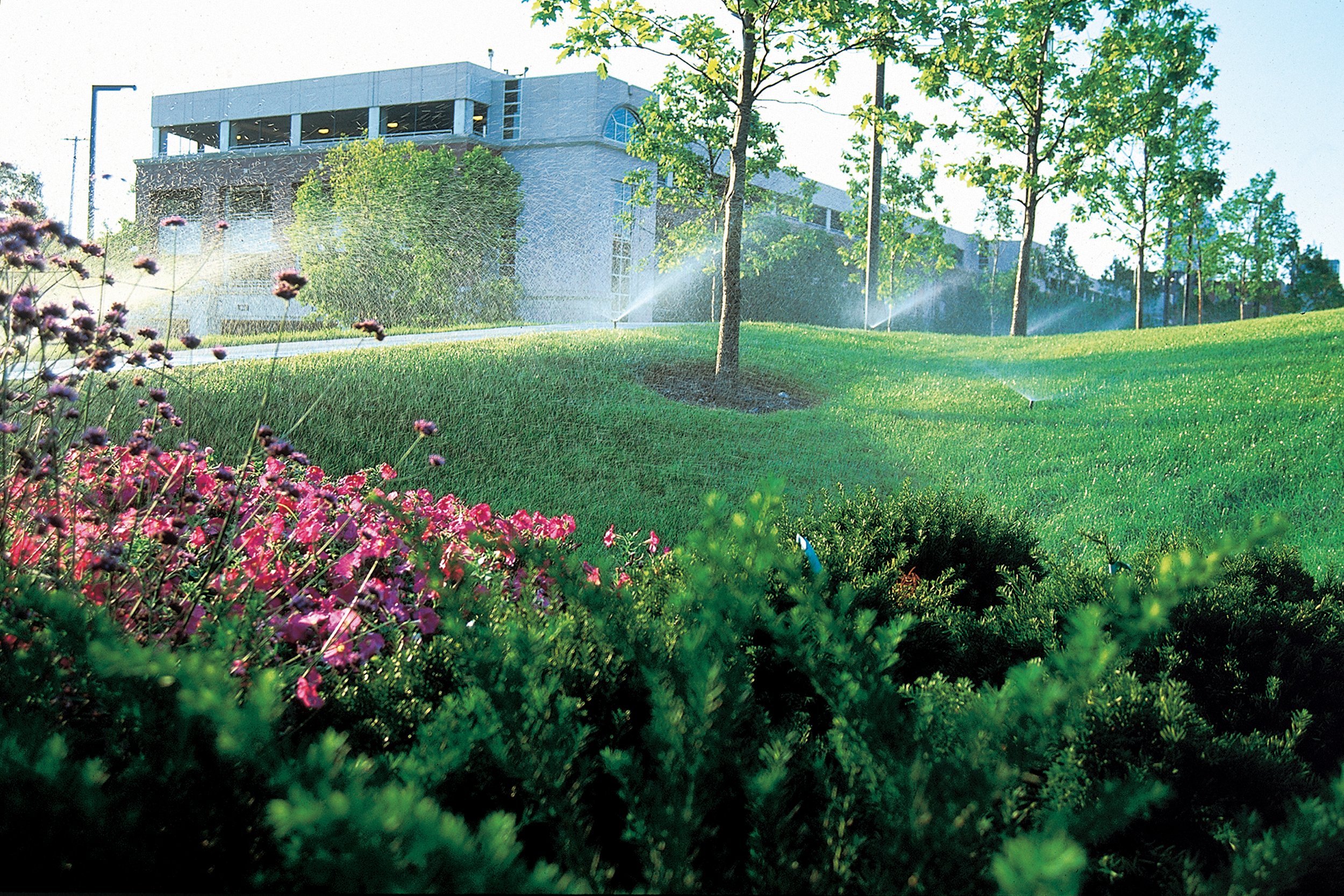
The Complete Guide to Commercial Irrigation Systems
- Commercial irrigation is defined by control, not just scale.
- Drip, spray, rotor, and subsurface each suit different sites.
- The biggest cost lever is ongoing management, not hardware.
- Choose a partner who manages the system, not just installs it.
- Weather-based scheduling and flow monitoring make savings measurable.
Managing water across a large commercial property — a corporate campus, a multi-tenant residential community, a municipal park — is a fundamentally different problem from watering a home lawn. Scale changes everything. A single mis-scheduled zone can waste hundreds of thousands of litres in a season, and an undetected leak can run for weeks before anyone notices it on the water bill. A well-designed commercial irrigation system is what keeps landscapes healthy, water costs predictable, and your grounds looking like someone is paying attention.
This guide covers what commercial irrigation actually is, the main system types, what drives the cost, the benefits and the common pitfalls, and how to choose both a system and a partner that fit your property.
What Is Commercial Irrigation?
Commercial irrigation is the design, installation, and ongoing management of watering systems built for large or complex properties — sites where scale, scheduling, and water accountability matter. Where a residential system might run a handful of zones, a commercial system can coordinate dozens across varied terrain, plant types, and municipal water restrictions.
The defining feature isn't size alone; it's control. Commercial systems pair robust infrastructure — mainlines, valves, and smart controllers — with the monitoring and scheduling logic that sends water exactly where and when it's needed. On the properties SMART Watering Systems manages across the GTA, that control is the difference between a landscape that thrives on less water and one that quietly overspends every month.
“Efficient watering turns ordinary outdoor spaces into attractive assets.”
Types of Commercial Irrigation Systems
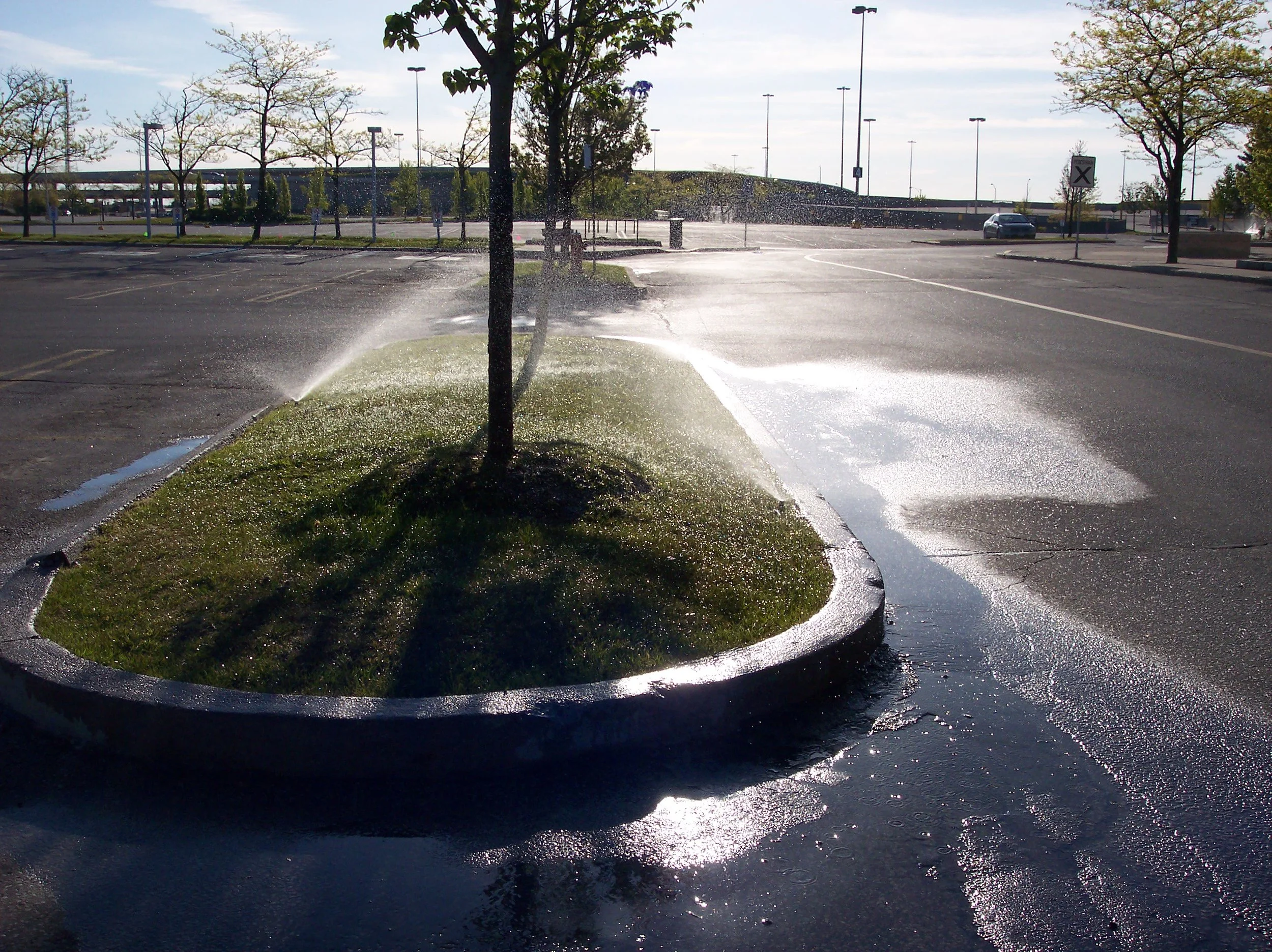
The right system depends on soil, planting, terrain, and water source. Most commercial sites use a combination rather than a single type.Drip irrigation: This option supplies water at a slow, steady rate directly to the plant’s root zone, reducing runoff and evaporation. Drip lines and emitters can be customized to match the property’s exact layout, promoting careful water application.
System typeHow it worksBest suited to
Drip Delivers water slowly to the root zone through emitters, cutting runoff and evaporationGarden beds, shrubs, medians, tight or irregular layouts
Spray heads Fixed heads spray a set pattern over small-to-mid zonesSmaller turf areas needing even coverage
Rotors A moving stream covers large areas with slower applicationSports fields, large open turf
Subsurface Buried dripline waters below grade, near-eliminating evaporationHigh-value turf, water-restricted sites, slopes
Surface / gravity Water guided across grade by gravityConsistent terrain, tolerant plantings
Each type needs a design tuned to the site — which is why professional irrigation design accounts for water source, topography, and local weather before a single head is specified. Get the design right and the system runs efficiently for years; get it wrong and you're managing problems every season.
The Benefits of a Well-Designed System
A common worry is that large-scale watering inflates overhead. Done properly, the opposite is true — the efficiency gains outweigh the cost.
Lower water bills. Precisely placed drip and spray zones deliver only what the landscape needs, and weather-based scheduling prevents watering before rain. On many sites this is the single biggest saving.
Less labour. Automated scheduling and remote monitoring replace manual valve-turning and site visits.
Consistent, healthy landscapes. Even coverage means no dry patches and no chronically overwatered corners — grounds stay presentable year-round.
Sustainability and compliance. Lower consumption helps meet municipal conservation targets and tenant expectations.
Protected property value. Well-kept grounds signal a well-run property to tenants and investors.
For a deeper look at the returns, see our breakdown of the advantages of smart irrigation systems.
The Common Challenges — and How to Avoid Them
Most commercial irrigation problems are predictable and preventable with the right oversight:
Inconsistent water pressure from undersized or ageing infrastructure — fixed with regulators or targeted upgrades.
Clogged emitters and heads that over-water some zones and starve others — caught by routine checks.
Poor scheduling that waters at peak evaporation hours — solved with proper controllers and sensors.
Limited monitoring, the costliest of all: on a large site, a leak with no monitoring can run for weeks. Continuous flow monitoring and leak detection turns a month-long loss into a same-day alert.
Varying site conditions — soil and slope changes that need custom zone mapping rather than a one-size layout.
Some property managers worry that large-scale watering solutions will inflate their overhead. However, the benefits can outweigh the costs when the system is aligned with common requirements. Some advantages go beyond basic water supply, including the potential for improved plant health, aesthetic appeal, and efficient resource allocation.
Water efficiency: Strategically placed sprinklers and drip lines ensure that only the necessary amount of water is delivered, which lowers monthly bills. This helps businesses allocate funds to other projects.
Reduced labour: Many advanced systems automate scheduling and monitoring. Minimal hands-on oversight translates to time and cost savings over the life of the installation.
Consistent coverage: Automated controls spread water evenly, preventing dry patches. Outdoor areas maintain a polished appearance and remain healthy longer.
Enhanced sustainability: Adopting a holistic approach to watering preserves natural resources. Lowering consumption can also align with sustainability requirements and community expectations.
Improved property value: Green spaces and healthy outdoor areas boost overall appeal. Prospective tenants or investors often perceive well-maintained grounds as a sign of responsible facility management.
Installing a well-planned solution frequently leads to a smaller carbon footprint and a higher return on investment. Efficient watering turns ordinary outdoor spaces into attractive assets. Some owners notice less plant stress and fewer surprises during extreme weather cycles. Overall, a robust irrigation setup amplifies quality of life for everyone who uses the property.
The Common Challenges — and How to Avoid Them

Overcoming the complexities of large-scale systems requires awareness of potential obstacles. Some circle around design or materials, while others stem from limited oversight and fluctuating conditions. Addressing these issues early can prevent more serious complications, like water waste or uneven coverage.
Inconsistent water pressure: Older or undersized infrastructure can result in uneven flow. Minor upgrades such as replacing outdated pipes or adding pressure regulators can help.
Clogged emitters or spray heads: Debris buildup affects performance and can result in overwatering some zones while under-watering others. Routine checks reduce this risk.
Improper scheduling: Without proper timers or sensors, watering might occur at inefficient times. Excessive evaporation can increase costs and diminish plant health.
Limited monitoring: Large properties need consistent surveillance to spot leaks. Failing to detect an issue promptly can lead to significant water loss and costly repairs.
Varying site conditions: Soil composition or slope variations complicate uniform coverage. Tailored solutions, including custom zone mapping, can mitigate this concern.
Detecting these issues early often depends on vigilant management and proactive system design. Professionals routinely stress the value of consistent site assessments and system tune-ups. Specific measures, such as sensor integration or remote monitoring, further lower risks. When challenges are tackled head-on, commercial setups become more predictable and reliable.
How to Choose the Right System
Three questions settle most decisions:
Do you have reliable water and pressure? Measure flow rate and pressure across the property first. Municipal, well, and reclaimed sources all change the pump, valve, and regulator specs. This assessment prevents the performance problems that plague under-planned systems.
Will it automate? Digital controllers, weather sensors, and soil-moisture probes remove guesswork and cut waste. Remote-access controllers let a manager check performance without a site visit — the foundation of a genuinely managed system.
Can it scale? Properties grow. Modular systems let you add zones or upgrade hardware without starting over, and adapt as conservation rules tighten.
Our 11 tips for choosing a commercial drip system go further on matching a system to your site.
What Commercial Irrigation Costs
Cost is more than pipes and heads — labour, permits, controllers, and ongoing maintenance all factor in, and they vary widely by site size, water source, and level of automation. The important reframe: the hardware is a one-time cost, but scheduling and leak prevention affect the bill every month. A system that costs more up front but is properly managed almost always wins on total cost of ownership. For how the numbers break down, see understanding the cost to install a commercial irrigation system, or request a written assessment for your property.
Choosing a Commercial Irrigation Company
The system matters less than who stands behind it. A capable partner assesses terrain, soil, and planting before proposing a design, and — critically — offers ongoing service, not just installation. When you evaluate providers, look at:
Experience and credentials on properties like yours. Certifications from recognized industry bodies signal consistent standards. (You can see who we are and our certifications here.)
Service agreements with clear response times, inspection schedules, and parts coverage — so support isn't improvised when something fails.
Technology and monitoring. Remote oversight, sensor integration, and real-time alerts separate a managed service from a break-fix contractor.
That last point is where the industry is heading, and where managed irrigation earns its keep: the system reports to your provider continuously, so problems surface as alerts instead of as brown patches or shocking water bills.
Maintaining the System
Regular checkups keep emitters and valves working and water distribution even. Seasonal calibration adapts to temperature, rainfall, and growth, and proactive leak detection catches small failures before they escalate. Proper winterization and spring start-up protect the system year-round. An organized maintenance plan extends system life and is far cheaper than emergency repairs — which is exactly what ongoing irrigation service is built to deliver.
Where the Technology Is Going
Commercial watering keeps getting smarter: wireless soil sensors that adjust run times to real moisture, cloud controllers managed from any device, weather-based automation that skips a cycle before it rains, and real-time flow monitoring that flags anomalies instantly. These aren't gadgets — they're how water savings become measurable and how a large site stays ahead of problems.

Frequently Asked Questions (FAQ)
-
It's the specialized watering strategy for expansive sites like corporate campuses, municipal parks, and multi-tenant communities — designed to distribute water efficiently, control costs, and keep landscapes healthy at scale.
-
The good ones do. Look for service agreements covering routine inspections, seasonal tune-ups, winterization, and emergency support — ongoing management is what keeps water waste and costs predictable.
-
Account for hardware, labour, permits, and ongoing maintenance. Total cost depends on site size, water source, and automation level — and the ongoing scheduling and leak-prevention savings often matter more than the install price.
-
Yes. Scalable, modular equipment and phased installation let you start smaller and expand. Sensor-based automation and any available municipal rebates help reduce ongoing bills.
-
Yes — experienced providers analyze soil, terrain, and climate to design around irregular layouts, slopes, and mixed planting without overbuilding.
Commercial Irrigation Resources